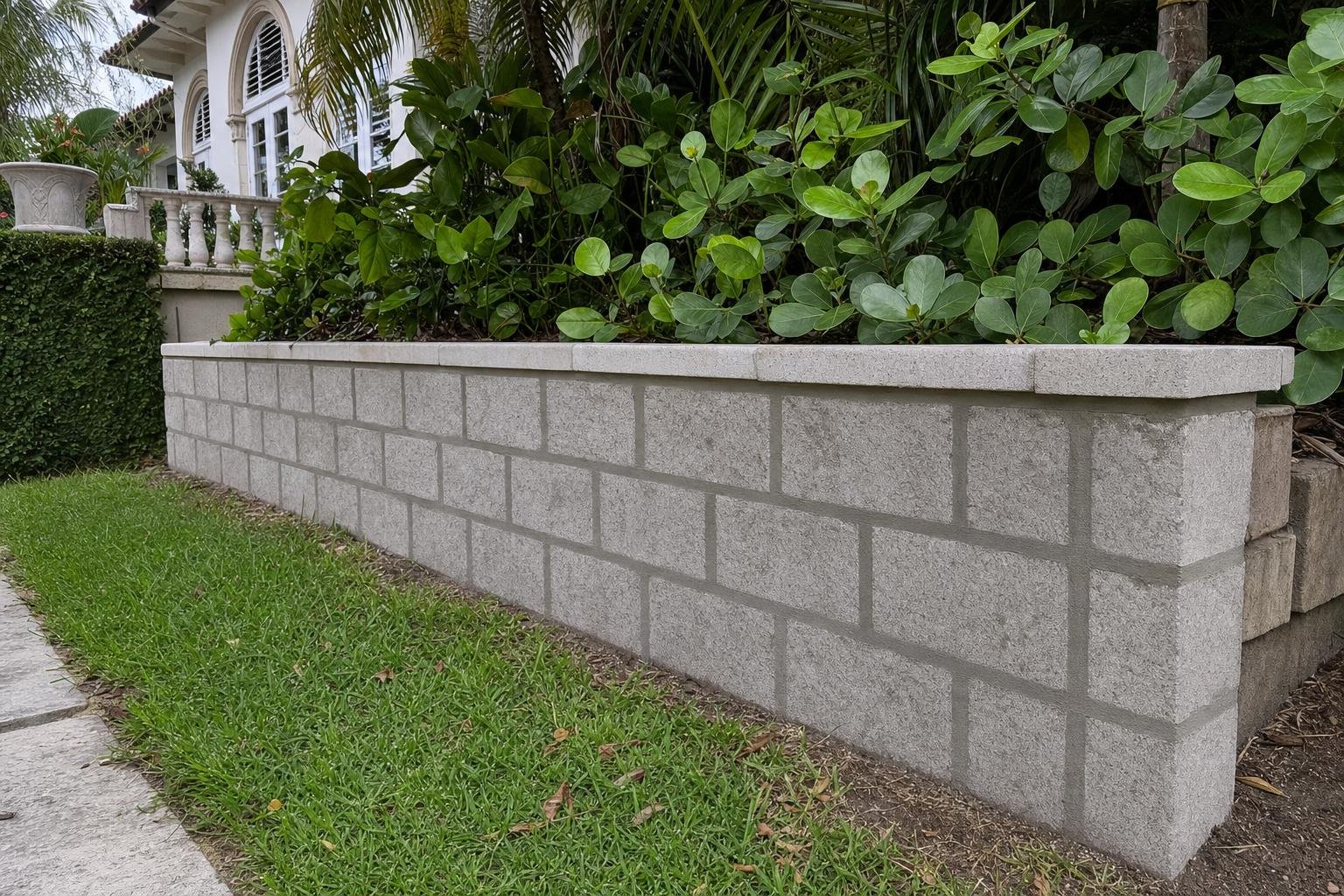
The fix is a drain installed behind the wall and routed to a positive outlet, with free-draining material backfilled over the excavated area. It suits walls that lean, crack, or lose soil where drainage has failed.
How much does the repair cost?
Typical retaining wall repair runs $400 to $850. Hardscaping Specialists can give you that range on the call, and the exact number is confirmed once we see the wall. It moves with how far the drain has to run and how much material has to come out.
A short on-site check decides whether your job stays at the low end or needs extra tile and backfill. You get the written quote after that check, which is described below.
See also paver driveway installation. Ready to hire for hardscaping in West Palm Beach? Start with our home page.
What affects how long the repair takes?
Time depends on how much drain tile goes in and how deep the dig has to go to reach a positive outlet. Hardscaping Specialists confirms the schedule after seeing the wall. Heavy rain can hold the job up, because the trench has to drain before the backfill goes in.
Soil matters here too. Where the lot sits on the Palm Beach soil series, found on coastal ridges, water moves through very quickly compared with the poorly drained soils elsewhere nearby, so a trench there tends to clear faster after a storm.
What steps does the job follow?
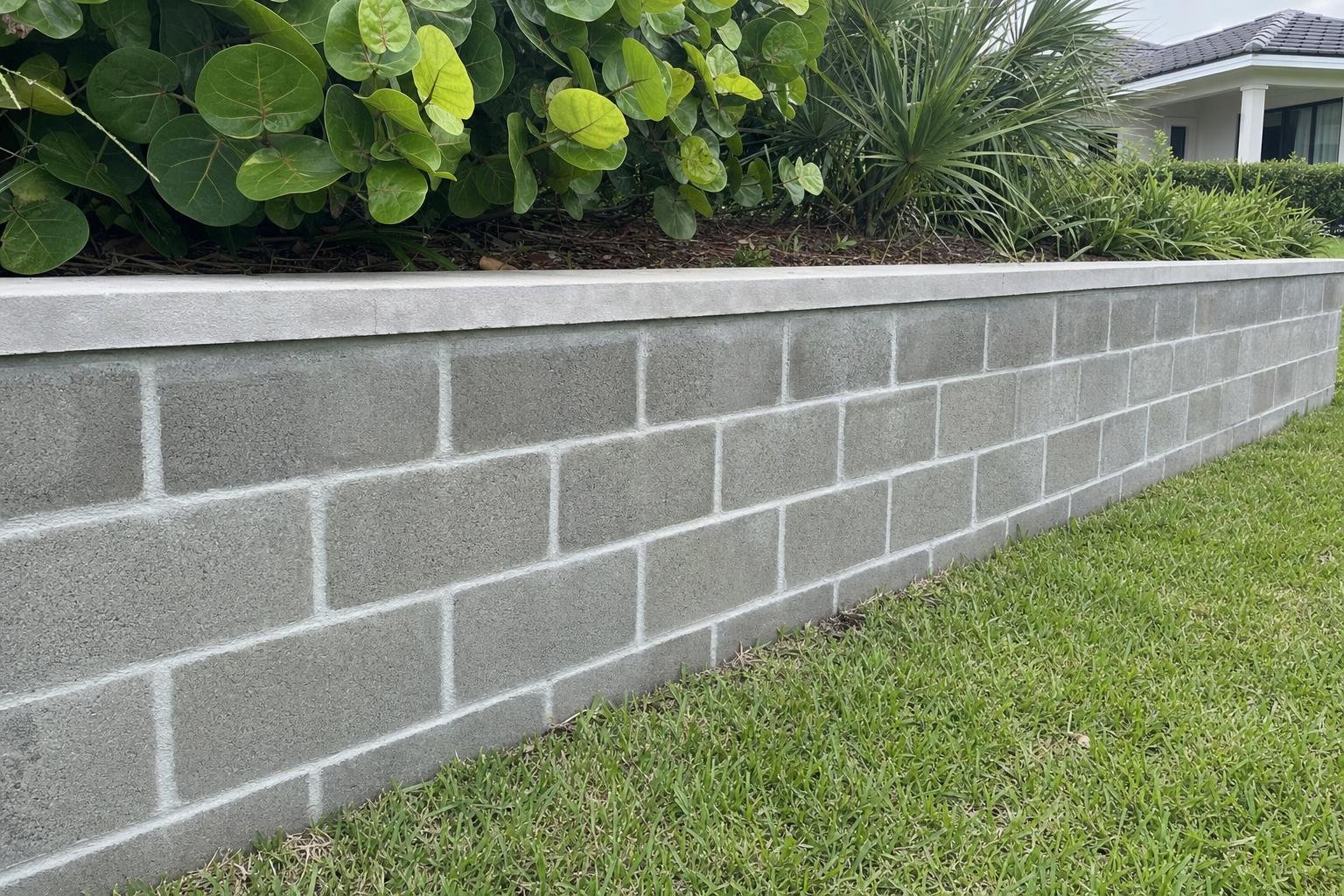
Hardscaping Specialists sets perforated drain tile in clean gravel behind the wall, runs it to a positive outlet, then re-backfills the excavated area with free-draining material. The tile gives water a path out, and the free-draining fill keeps it from sitting against the wall again.
The outlet gets as much attention as the tile. Palm Beach County is flat, the ground saturates, and intense or prolonged rain leads to ponding, so a drain that ends in a low spot just moves the problem. The runoff path has to stay clear all the way off the site.
How does Hardscaping Specialists check the wall before starting?
Before any digging, Hardscaping Specialists measures lean with a digital inclinometer and tracks movement with a calibrated crack monitor. The readings show whether the wall is still shifting and where water is getting in, which sets where the tile and outlet go.
Readings taken over a short period also show whether the wall has stabilized enough for the drain repair to hold. With the water's path known, the tile goes where it intercepts the flow and keeps the soil behind the wall drier.
What's Involved
Concretely, the work covers:
- If it is unclear whether the wall is still moving, install a crack monitor across a major crack or joint and measure it again later.
- Prepare a repair scope that specifies the anchor type, count, and depth, and whether drainage work is needed.
What It Typically Costs
These numbers are a reasonable place to start, and you get a written price for your own job before you commit.
$250–$1,100
$45–$70 per sq. ft.
$575–$1,100
Also Available
Fast Scheduling
(561) 593-1860Call and tell us what you're dealing with, and there's no pressure to book.
Get an Estimate