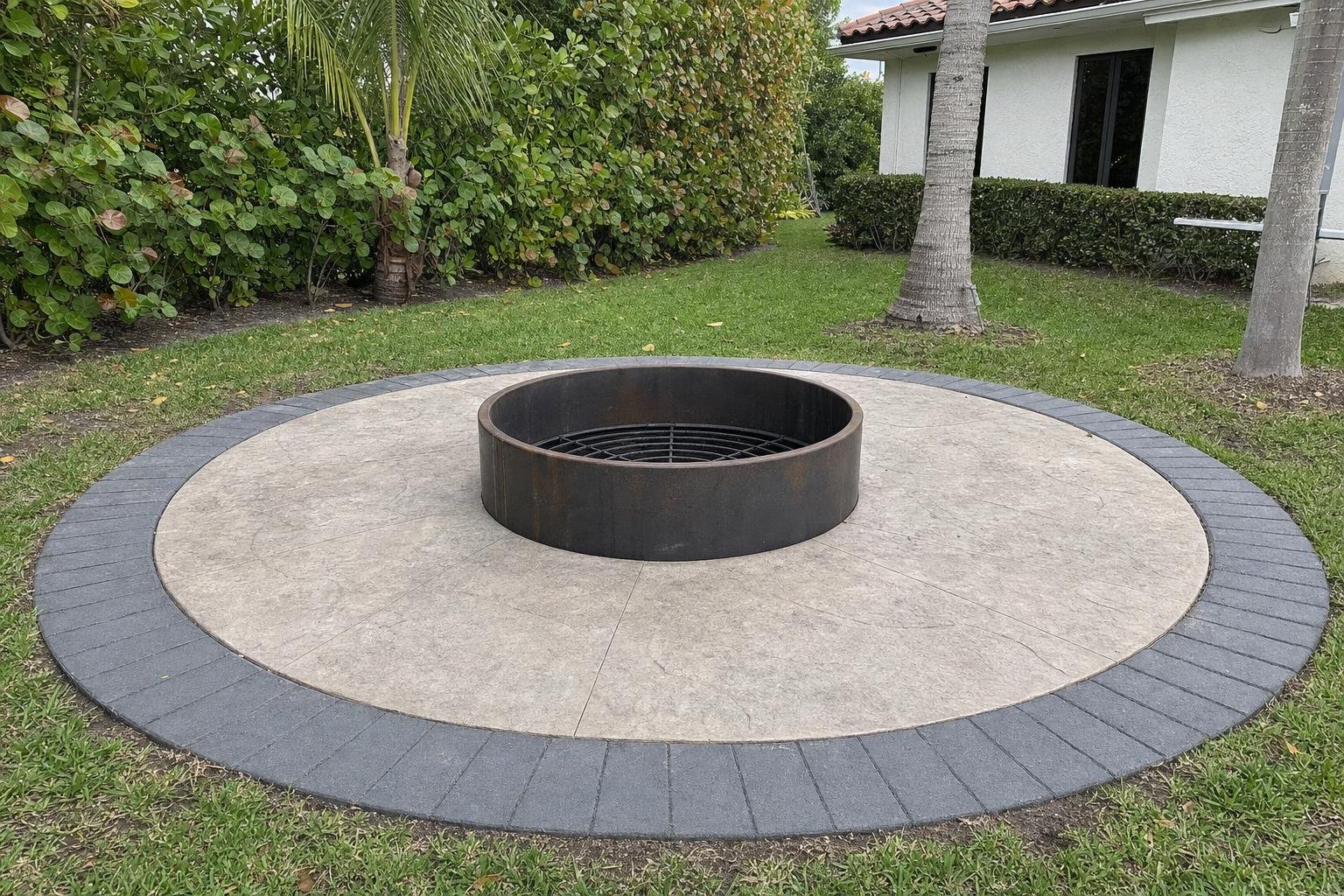
Below: where a pit fits, how it goes together, what it costs, and how local rain and storm risk affect where it sits.
Where does a stone fire pit make sense?
A stone fire pit makes sense when your yard has a level spot that drains well and you want a permanent place to sit outside. West Palm Beach is hot, in climate zone 2A with long cooling seasons, so a permanent seating spot gets plenty of use.
A level spot means less digging and less leveling work. Hardscaping Specialists walks the yard with you and settles on the location before any block is set.
A common next step is paver patio installation. Need hardscaping in West Palm Beach for another job? Start on our home page.
How is a stone fire pit built?
Hardscaping Specialists digs down to firm soil with a spade, packs the base with a hand tamper, sets the first course of blocks level side-to-side and front-to-back, then builds the remaining courses in a running-bond pattern. Masonry adhesive goes on with a caulking gun.
The first course carries everything above it. If it rocks or sits out of level, every course after it repeats the error, so we check each block in both directions before moving on. Running bond staggers the joints so no seam lines up with the one below, and the adhesive ties each block to the course beneath it.
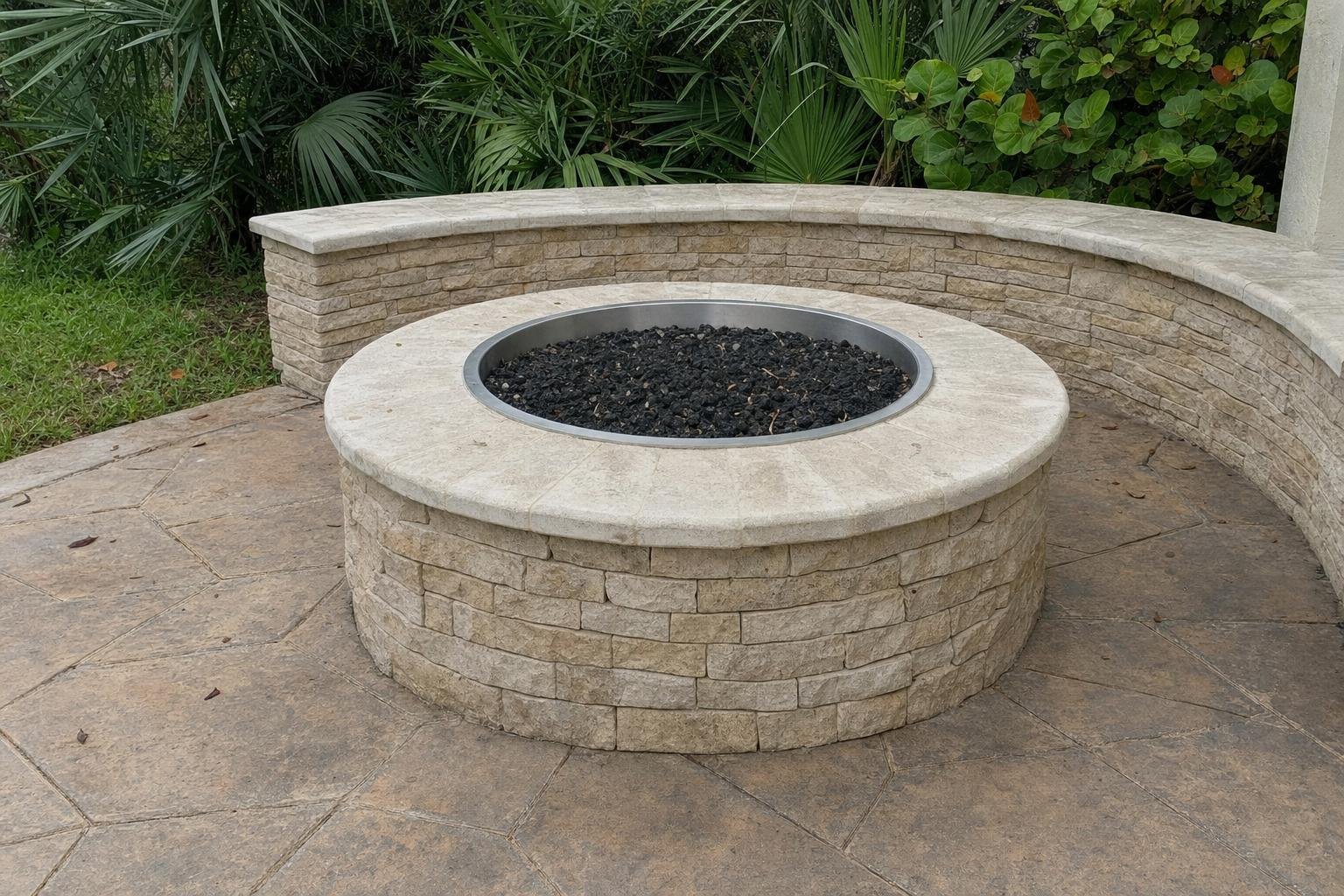
What does a stone fire pit cost?
A 36-inch stone fire pit, installed, typically runs $325 to $2,700. That is a wide range, and Hardscaping Specialists can give it to you on the first call. The exact number is confirmed after we see the yard and the spot you have picked for the pit.
Ground that needs more digging or more attention to drainage takes more labor than a level, dry spot, and the written quote reflects that.
How do rain and storm surge affect where the pit goes?
Palm Beach County is flat, and saturated soils plus heavy or prolonged rain cause ponding, so Hardscaping Specialists sets the pit where runoff paths stay clear. Near the coast, storm surge from tropical storms and hurricanes is another reason to think hard about where the pit goes.
We do not put a ring in a low spot where water gathers or across a path water already uses. Packing the base on firm soil with the tamper keeps the first course from settling in wet ground. On a lot near the coast, we talk through surge exposure with you before the location is final.
What the Work Involves
On a typical job, a few parts of the job:
- Check applicable local fire codes before choosing the installation location.
- Lay one course of blocks to mark the pit, then mark the circle about 1 inch outside the ring and remove the blocks.